 Cres Ian Lorenzo
A REGIONWIDE validation of land use and forestry data is providing better clarity on how expansion of agriculture is reshaping Southeast Asia’s carbon balance and what it means for food production across Association of Southeast Asian Nations (Asean) member states.
Findings from a regional Land Use, Land Use Change, and Forestry (LuluCF) study show that landscapes in the LuluCF sector function as both carbon sinks and sources depending on management, a duality that directly affects sustainability in agriculture.
The study was led by the Department of Environment and Natural Resources (DENR) under its Asean chairmanship, supported by the Asean-EU-German Climate Action Programme funded by the European Union (EU) and Germany and implemented by GIZ. The technical work was provided by the Southeast Asian Regional Center for Graduate Study and Research in Agriculture (Searca).
Geospatial baseline trends from 2000 to 2022 analyzed by Searca experts Rex Victor Cruz and Cristino Tiburan Jr. indicate rapid agricultural expansion, infrastructure development, and urbanization as primary drivers of land conversion.
The data, cross-checked against national records and regional datasets, revealed discrepancies in land use categories, methodologies, and mapping intervals among countries, underscoring gaps in how agricultural land is tracked and accounted for in climate planning.
Country audits presented by representatives from the Asean Working Group on Climate Change, Asean Senior Officials on Forestry, and national mapping agencies showed varied approaches to classifying agricultural, forest, and urban lands.
The comparison highlighted the need for a comprehensive, spatially explicit inventory to support agriculture sector decision-making, particularly in distinguishing productive farmlands from degraded or converted areas.
For agriculture, the implications are significant. In case studies such as the Laguna de Bay Basin in the Philippines, findings detailed by the DENR-Forest Management Bureau and Laguna Lake Development Authority pointed to ecological challenges, forestry dynamics, and institutional pressures driving land use change.
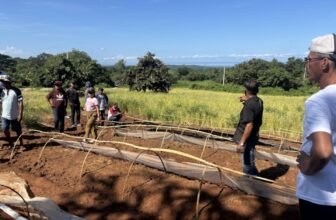
Ground truth validation in the Laguna de Bay Basin and in Cambodia’s Keo Seima Wildlife Sanctuary showed how agricultural encroachment, coupled with economic and policy drivers, alters soil health, water retention, and forest cover — factors that determine long-term farm productivity.
Analysis of direct and indirect drivers produced a matrix of technological, economic, and policy factors shaping landscape change.
Agricultural intensification, crop switching, and expansion into forest margins were identified alongside infrastructure growth as key contributors to emissions when land is not sustainably managed.
Conversely, practices that integrate forestry, agriculture, and agroforestry were found to enhance carbon retention while maintaining production.
DENR Climate Change Service Division Director Elenida Basug said that depending on management, landscapes can serve as either vital sinks or major sources of emissions.
Also, DENR Assistant Secretary for Policy, Planning, International Affairs and Climate Change Noralene Uy emphasized cross-border cooperation in translating commitments into measurable actions, a point relevant to agriculture as regional food systems face shared climate risks.
Sustainable practices identified
The review also identified sustainable land management practices applicable across forestry, agriculture, agroforestry, and urban domains.
Criteria co-developed for scaling such practices include sectoral indicators on soil conservation, agroforestry integration, efficient land use planning, and resilience to climate variability.
Field interventions compiled from member states point to approaches that allow farmers to maintain yields while contributing to carbon sequestration.
Policy alignment assessments led by Searca Climate Policy Expert Juan Pulhin, with focal points from Cambodia, the Philippines, Thailand, and Singapore, examined synergies between domestic land-use policies and Nationally Determined Contributions.
Gaps were noted where agricultural development plans and climate targets are not fully aligned, suggesting opportunities to embed sustainable agriculture measures into national climate strategies.
A LuluCF Database Inventory Platform now being refined is expected to provide Asean member states with a unified system to query land use data, track agricultural land transitions, and support mitigation planning.
For the agriculture sector, such a tool offers a basis for evidence-based decisions on land allocation, restoration of degraded farmlands, and protection of high-value agricultural and forest areas.
With agriculture remaining central to livelihood and food security in Southeast Asia, the validated evidence base positions land management as a critical lever for balancing production, reducing emissions, and attaining long-term sustainability.