 Cres Ian Lorenzo
LAOAG CITY, Ilocos Norte — Onion, one of Ilocos Norte’s prime high-value crops, will soon be covered with Good Agricultural Practices (GAP) certification, which will enable farmers of the bulb improve their products and reach more markets.
The Department of Agriculture Regional Field Office 1 (DA-RFO1) through the Philippine Rural Development Project (PRDP) has been conducting training on Philippine Good Agricultural Practices (PhilGAP) for fruits and vegetables in Laoag, with onion as a focus commodity.
The goal is to align on-farm practices with Republic Act 10611, or the Food Safety Act of 2013, and the Philippine National Standard (PNS) Code of Good Agricultural Practices.
Trainings covered on-farm protocols adapted to onion production, including assessment of plot history, use of nature-based soil and water conservation, and responsible application of fertilizers and pesticides.
Sessions also tackled sanitary harvesting and crop protection measures to reduce biological and chemical risks at the farm level.
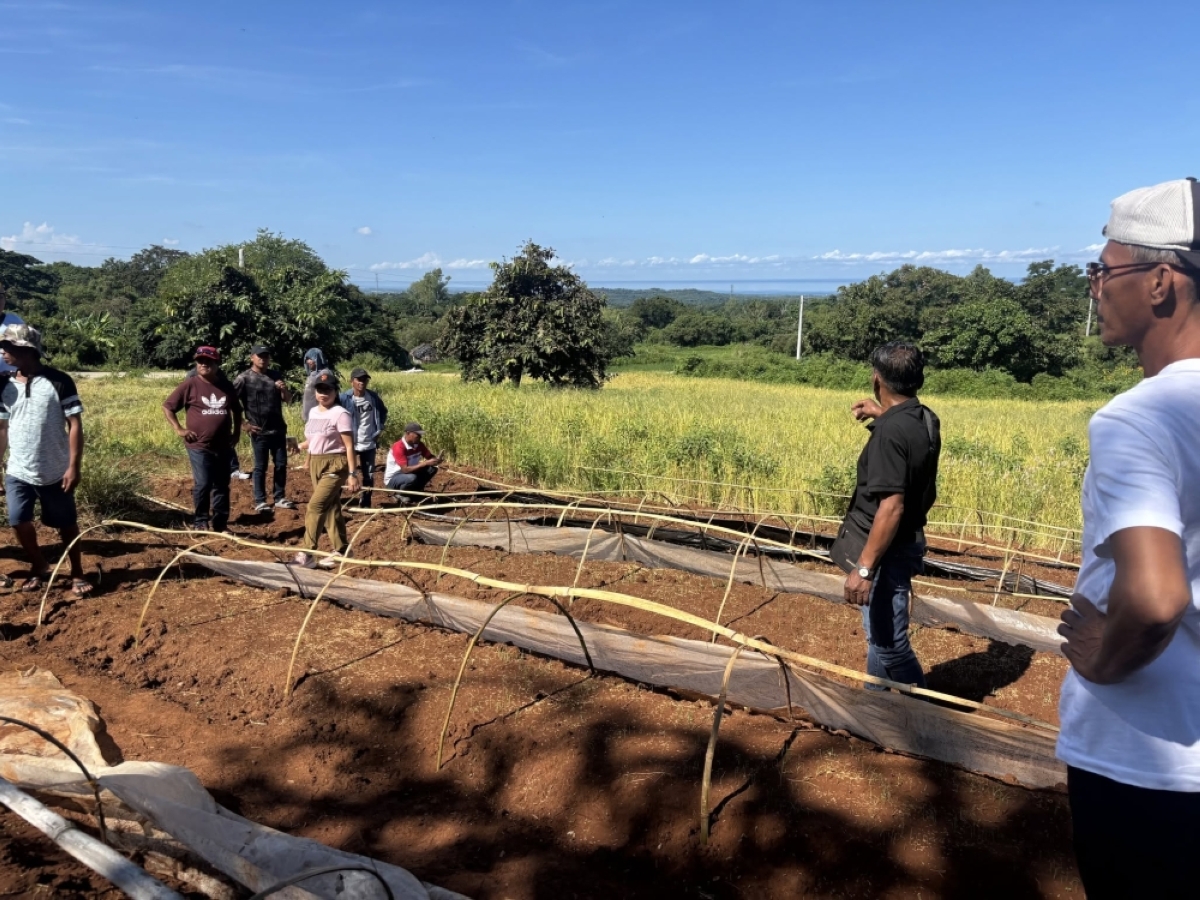
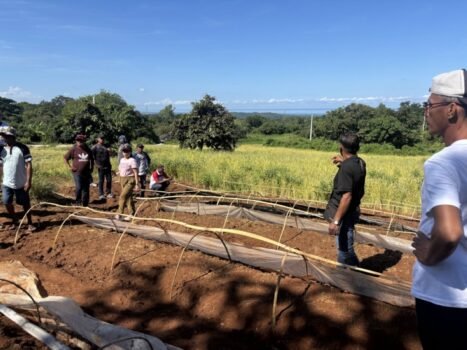
Onion growers from the Bacarra Multi-Purpose Cooperative based in Bacarra, Ilocos Norte, are aligning their farm practices with the Food Safety Act to produce onions of better quality. DA PHOTO
Agriculturist Mery Joyce Aglibao from DA-RFO1 emphasized that GAP compliance serves as a gateway to higher-value markets because it signals food safety, product quality, traceability, and protection for both consumers and farm workers.
The DA through PRDP aims to increase the number of PhilGAP-certified onion farms in Region 1, helping farmers meet institutional buyer requirements and retail standards.
Onion status in Region 1
Onion remains the Ilocos Region’s leading high-value crop. Government data showed the region produced 52,839 metric tons in 2025, contributing to national supply alongside Region 3 (Central Luzon), Region 4B (Mimaropa), and Region 2 (Cagayan Valley).
In Ilocos Norte, production is concentrated in the northern towns such as Bacarra, Pasuquin ,and Burgos where clustered farming is being promoted.
The provincial government’s clustered farming program, with a budget of P30 million, reported a 12-percent increase in onion production, with 60 hectares yielding 669 metric tons in the February to April season in one cycle.
Despite gains, challenges persist. Post-harvest losses remain high, with onion rot claiming up to 40 percent of harvests in the absence of cold storage.
To address this, a P101-million cold storage facility funded by the World Bank under PRDP is set to rise in Barangay Buyon, Bacarra. The Ilocos Norte provincial government will provide a counterpart funding of P20 million for the project.
With a capacity of 198,000 kilograms, the facility is intended to stabilize farmgate prices during peak harvest and reduce postharvest losses.
The region’s onion industry, historically known for shallots or “lasona” as well as bulb onions, operates largely on small plots averaging half a hectare, relying on family labor and seasonal irrigation after rice.
With new storage infrastructure and GAP certification efforts, Ilocos Norte is positioning its onion sector not just for higher volume, but for safe, traceable, and market-ready production.