 Cres Ian Lorenzo
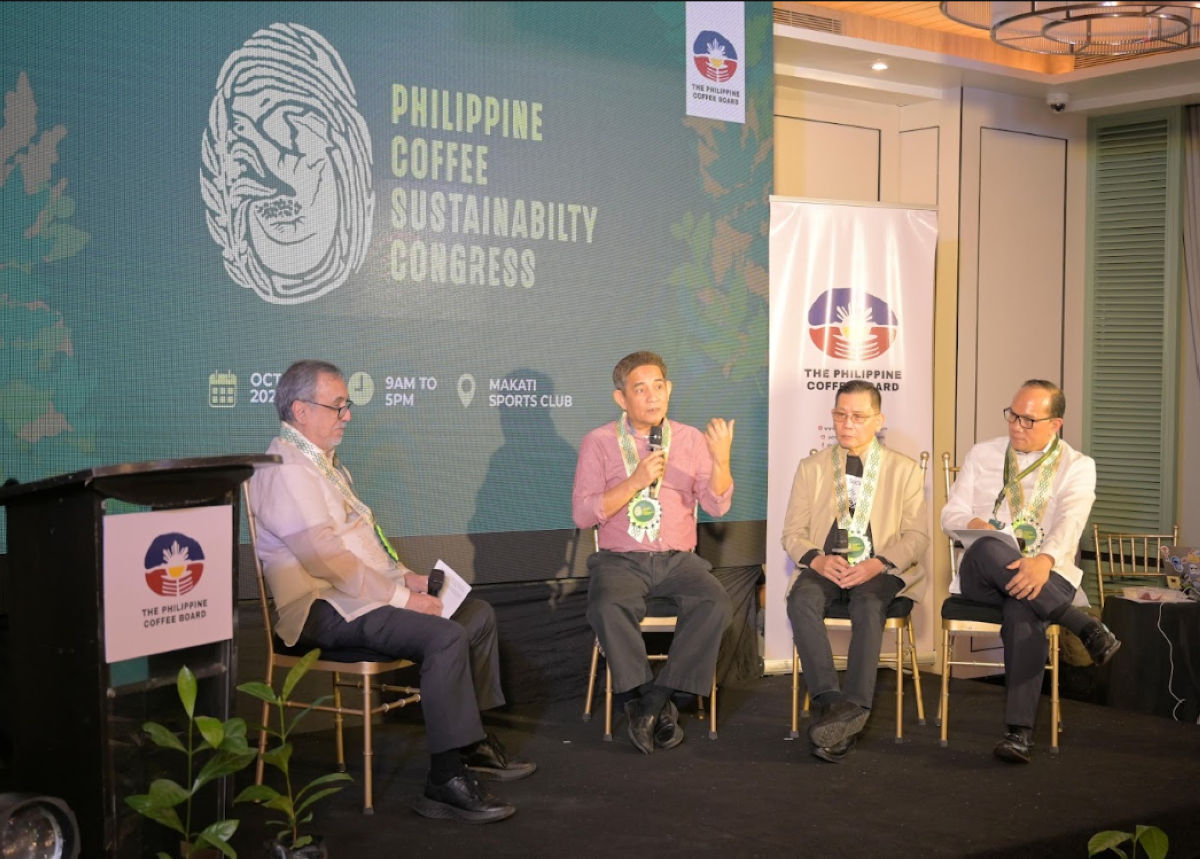
THE 2nd Philippine Coffee Sustainability Congress also showcased small to medium businesses and eco-friendly practices that can set the trend for the local coffee industry.
Held on Oct. 15 to 16, the congress organized by the Philippine Coffee Board Inc. (PCBI) brought together coffee farmers, entrepreneurs, researchers, government representatives and industry professionals to explore ways to build a stronger, more sustainable Philippine coffee industry.
“Through its presentations, success stories and hands-on activities, the congress reinforced the importance of collaboration among farmers, businesses, government institutions, researchers and coffee professionals in building a more resilient and inclusive Philippine coffee industry,” the PCBI said in a statement.
With the theme “Cultivating Tomorrow’s Cup: Working Toward a Sustainable Future for Philippine Coffee,” the two-day event highlighted inspiring success stories, sustainable agricultural practices, innovative uses for coffee by-products and opportunities for education and industry development.
Among the Congress’ featured international speakers was Adam Esham, co-owner of House of Kendal in Malaysia, who shared his family’s coffee journey and the development of their coffee business. His presentation offered a regional perspective on how coffee heritage, entrepreneurship and a commitment to quality can contribute to building a successful and sustainable coffee enterprise.
The IP Coffee Community panel brought together Gilbert Baltazar of DA-4K, Benjamin David Abadiano of the Pamulaan Center for Indigenous Peoples Education and Danilo Crobalde of the Land Bank of the Philippines to discuss opportunities for indigenous coffee communities through education, financing, enterprise development and market access.
Meanwhile, Gio Paolo Espital of the Philippine Rural Reconstruction Movement and Nicolo Aberasturi of Banhaw Agriculture explored alternatives to commercial fertilizers, highlighting organic and regenerative approaches to improving soil health and reducing farming costs.
The Success Stories in Production panel featured coffee growers sharing their personal journeys, challenges and achievements in developing successful farms and enterprises.
Panelists included Democrito Diamante, former mayor of Tuburan, Cebu, who developed Tuburan Coffee; Leovino Anacay, a coffee farmer from Amadeo, Cavite; Ylaine Giangan of Kuvi Integrated Farm; and Mayor Sitti Djalia Turabin-Hataman of Isabela City, Basilan. Their experiences demonstrated how perseverance, innovation and community collaboration can transform coffee farming into a sustainable livelihood.
The Women in Coffee panel also highlighted success stories from different areas of the industry. Young coffee professionals Angelic Gail Perez and Angelin Gaby Perez, both 18, shared their achievements in coffee quality assessment, roasting, competitions and mentoring. Maria Teofanie Tutanes, a nurse and entrepreneur behind Mnemo Coffee, brought insights from farming, processing, manufacturing and marketing, while Noemi Dado of Agnep Heritage Farms in Benguet shared her family’s journey of reviving a heritage coffee farm and producing high-quality, traceable coffee.
In furthering sustainability, Richard Khoo, CEO of Lastic Singapore, discussed opportunities within the circular coffee economy, while Stu Balmaceda, founder of SIDE B Upcycling, showcased ways to transform coffee waste into useful products.
PCBI Director Jose Mamar and Allan Bondad of the Department of Science and Technology-Forest Products Research and Development Institute presented coffee briquettes, an alternative solid fuel produced by compressing processed coffee waste into compact blocks that can be used as a source of heat.
For her part, Michelle Fernandez of GCash also discussed the partnership between PCBI and GForest in supporting the regeneration of local coffee communities.
Brendan Rosen, head trainer of Naturland Philippines, introduced the Naturland Academy and its role in building skills for organic coffee production, emphasizing sustainable agricultural practices and farmer education.