
 Cres Ian Lorenzo
CABUYAO, Laguna — Technologies provided by the Philippine Center for Postharvest Development and Mechanization (PhilMech) has enabled the Casile-Guinting Upland Multi-Purpose Cooperative (CGUMC) to venture into value-adding, boosting their earnings in the process.
Established in 2011, the cooperative, known for its Café de Cabuyao brand, is into coffee cultivation and processing in the upland barangays of Casile and Guinting.
In its early years, the group relied on traditional sun-drying, spreading coffee berries on pavements and covering them with mats to avoid direct contact with the ground. The method left the produce exposed to rain, contamination, and uneven drying, affecting quality.
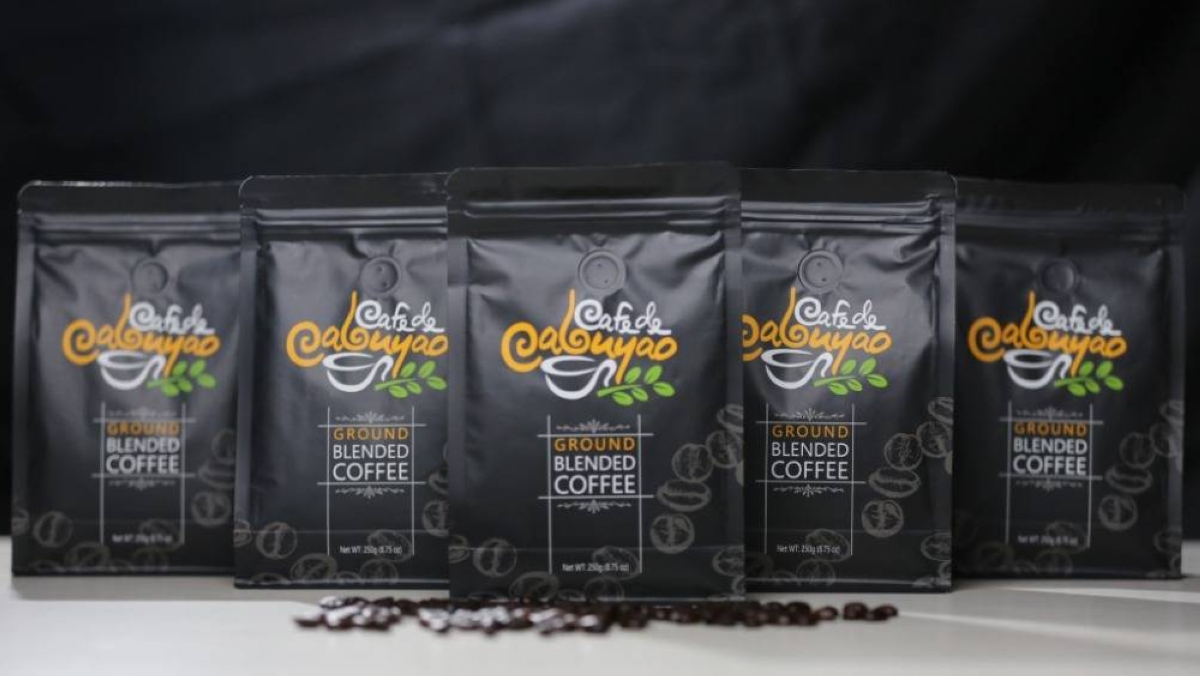
Among the products of the Casile-Guinting Upland Multi-Purpose Cooperative based in Cabuyao, Laguna is processed coffee beans under the Café de Cabuyao brand. PHILMECH PHOTO
Cooperative Manager Michelle Dela Cruz said that concerns over taste and quality prompted the group to seek technical assistance.
“We were told that our coffee does not taste good, and so we realized that we need a lot of improvement,’” Dela Cruz said.
The cooperative connected with PhilMech. In 2017, it shifted from pavement drying to using PhilMech-provided Multi-Commodity Solar Tunnel Dryer and Greenhouse Solar Tunnel Dryer, along with a coffee pulper, huller, and moisture meter to improve coffee bean processing.
Dela Cruz said the adoption of the technologies from PhilMech resulted in to faster and more consistent drying and better product quality.
“There was a big improvement in the quality of our product, our coffee. At the same time, drying became faster and no longer difficult. Even if you leave it inside the solar dryer, as long as you check it daily, the coffee dries well,” she said.
The improvement in processing has allowed the cooperative to expand its enterprise and increase earnings.
From an income of around P10,000 per month in its early operations, the cooperative can now earn the same amount in a single day through its Café de Cabuyao brand, which markets directly to consumers.
Beyond its own operations, the cooperative has opened its facilities to other coffee processors through learning visits, sharing its experience in using postharvest equipment and maintaining quality standards.
“Our cooperative has no hesitation to help and share what we have learned. This is our way of giving back,” Dela Cruz said.
PhilMech and other agencies provided training alongside equipment, emphasizing operation, maintenance, and sustainable use.
Dela Cruz said the cooperative allocates funds for upkeep to ensure long-term functionality.
“Over time, these will also break down, so we need to maintain and take care of them so we can use them for a long time,” she said.
“We need a lot of improvements. To achieve that, we need to keep up with technology, with the modern times today. Whatever change there is, it comes with progress,” Dela Cruz said.
She also acknowledged the role of partner institutions in the cooperative’s growth.
“From then until now, we are deeply grateful to PhilMech. It is among those who shaped us to reach our current state. That is why we are never tired of expressing our gratitude,” she added.
Dela Cruz also noted that with continued support and shared learning among processors, the cooperative is positioning its local brand as part of Laguna’s growing coffee industry while maintaining its role as a learning site for other coffee-growing communities. Leander Domingo