 Cres Ian Lorenzo

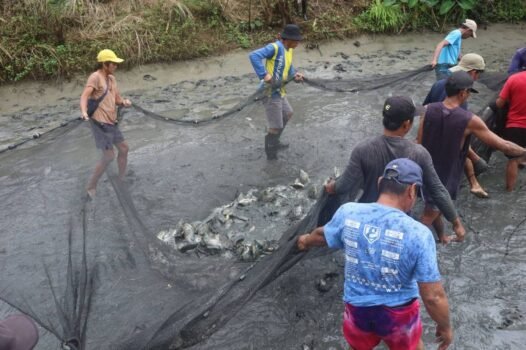
LA PAZ, Abra — For communities in this upland province, access to fish no longer depends on daily river catches. Through backyard ponds supported by government assistance, local fisherfolk are now harvesting tilapia regularly.
The shift is evident in Barangay Progresso, where members of the Progresso La Paz Fisherfolk Association gathered recently for an “Aldaw ti Panagkalap” or Harvest Festival to display their latest tilapia output.
Association president Sedfrey Siganay said the introduction of pond culture has changed how families source protein.
“The tilapia project helps us a lot. In the past, we relied on the river. If there was no catch, we made do with vegetables. Now we have fish in our ponds, and we can also sell the excess,” Siganay said.
The association is one of the beneficiaries of the Bureau of Fisheries and Aquatic Resources–Special Area for Agricultural Development (BFAR-SAAD) project, which is national in scope and aims to reduce poverty among marginalized fishing communities.
Siganay said the support package included tilapia fingerlings, free feeds, fishing nets, crates, ice boxes, cast nets, and a water pump to maintain pond levels during dry periods.
BFAR-SAAD La Paz Area coordinator Marcelo Pascual reported that the group’s operations have yielded substantial results. To date, the association has produced close to six metric tons of fresh tilapia with a total gross revenue of P700,000.
Pascual said the group is now working to sustain and expand its earnings through direct marketing.
“To roll out and grow their capital, they started their Kadiwa last year, 2025. They coordinated with BFAR-CAR (Cordillera Autonomous Region) and ordered various fishery commodities to sell,” Pascual explained.
The Kadiwa initiative allows the association to market not only their own tilapia but also other fishery products sourced through BFAR-CAR, giving members more items to offer consumers while increasing revenue streams.
BFAR-SAAD is designed as a flagship intervention to assist poor fisherfolk through three main components: livelihood inputs, capacity building, and market linkages.
In La Paz, the program combined provision of materials with training on pond management to help ensure that harvests are consistent and post-harvest losses are minimized.
With ponds now functioning as a reliable source, families in the association report less dependence on unpredictable river fishing and fewer gaps in household nutrition. At the same time, the income generated is reinvested into feeds, pond maintenance, and the association’s marketing activities.
For La Paz, the model illustrates how inland aquaculture can address both food access and economic opportunity when combined with inputs, technical guidance, and organized selling platforms.