 Cres Ian Lorenzo
BUGUEY, Cagayan — Stakeholders of the crab industry in this coastal municipality in northern Cagayan are working to preserve where their prized commodity thrives — in the mangroves where nipa trees also grow.
Buguey has long been known for its mud crab supply. In July 2024, the Department of Agriculture (DA) recognized the Buguey as the “Crab Capital of Northern Luzon,” citing its share of regional output.
Government data showed the town produced 45.78 metric tons in 2023, about 40 percent of Cagayan Valley’s total that year.
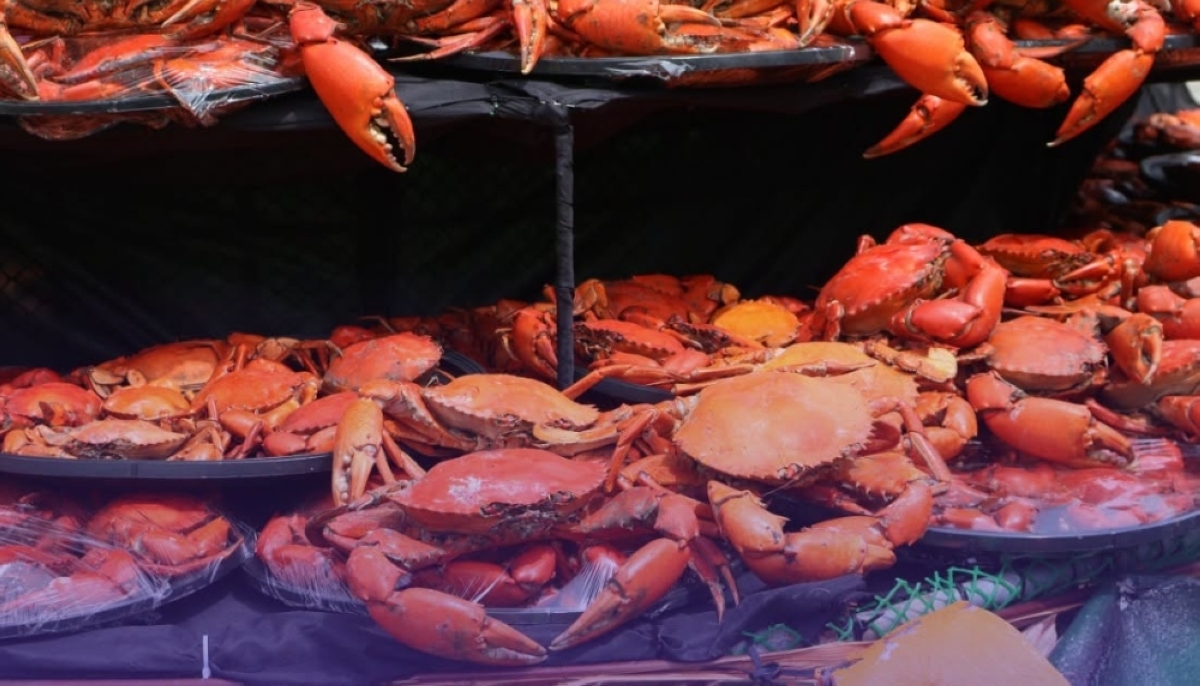
PRIZED COMMODITY Crabs are the most popular agricultural product of Buguey, Cagayan. The municipality has vast mangroves where crabs thrive. DA PHOTO
That volume supports a chain that goes beyond ponds — feed suppliers, processors, transporters, and market vendors.
Local officials say the strength of the industry rests on the health of the town’s ecosystem. Mangrove forests and nipa swamps serve as natural habitat and nursery for crabs and other species. Without them, crab production drops.
To sustain production, Mayor Licerio Antiporda III said the municipal government is rehabilitating mangrove and nipa areas, and regulating crablet collection. Harvesting of crablets below 200 grams is prohibited, and selling crablets outside the municipality is not allowed.
The intent, he said, is to keep seed stock within Buguey and prevent overharvesting that could undermine future harvests.
The regulation points to a central challenge in mud crab agribusiness: supply of crablets. Wild catch alone cannot sustain expanded farming.
To address the gap, Buguey became the site of the first mangrove crab hatchery in the Cagayan Valley in 2024 through a partnership among the Department of Science and Technology-Philippine Council for Agriculture, Aquatic and Natural Resources Research and Development, Cagayan State University-Aparri Campus, and the Bureau of Fisheries and Aquatic Resources Region 2 office.
The facility was designed to produce up to 480,000 crablets per year, providing local growers a more reliable source of stock and reducing pressure on wild populations.
In January 2026, BFAR extended P10 million to upgrade the hatchery into a multispecies facility. The expansion aims to diversify aquaculture options and give fisherfolk alternative species to raise when crab cycles fluctuate.
Government and academic partners are also looking at ways to lower production costs, one of the main barriers for small growers.
One research initiative explores using invasive species such as golden apple snails and janitor fish as alternative feed for crab fattening — an approach that could cut feed expenses while helping manage pest populations in farms and waterways.
Beyond hatchery and feed, the next phase is value addition.
The municipal government plans to develop cold storage and processing capacity to improve post-harvest handling, maintain quality, and allow producers to sell beyond fresh, live markets. Better storage extends shelf life, reduces losses, and gives growers leverage on pricing.
There are also plans to develop processed crab products and tap other resources from the same ecosystem.
Nipa, abundant in Buguey’s swamps, is being eyed for products such as vinegar, sugar, wine, and juice. This can provide additional livelihood opportunities for those into crab farming.
BFAR Region 2 Director Angel Encarnacion has cited Buguey’s push to strengthen fisheries management and enforcement against illegal and unregulated fishing, emphasizing that sustained production depends on both regulation and support services.
For growers, the combination of habitat protection, hatchery supply, cost-reducing feed research, and post-harvest infrastructure marks a shift from subsistence harvesting to a more structured agribusiness model.
In Buguey, the mud crab remains a product of its mangroves. The effort now is to make sure the mangroves remain productive — and that every stage from crablet to market creates more value for the community.