
 Cres Ian Lorenzo

THE Philippine Swine Institute (PSI) is urging the government to reassess the country’s pork import policy from a broader food-security and investment perspective, warning that rising dependence on imported pork could undermine long-term recovery of the domestic hog industry if not matched by measures that restore producer confidence and competitiveness.
According to PSI, the issue is no longer simply about whether imported pork is cheaper than locally produced pork. Rather, it is about whether the country is creating the right market conditions for Filipino hog raisers to rebuild production, attract capital, and remain viable over the long term.
Official data show that the country’s swine inventory remained virtually stagnant between 2024 and 2025, inching up from about 8.75 million to 8.79 million heads, still substantially below the herd size before African swine fever (ASF) severely disrupted the industry.
At the same time, domestic hog production declined from about 1.703 million metric tons (MT) in 2024 to 1.658 million MT in 2025, a reduction of roughly 2.7 percent.
Pork imports, meanwhile, moved in the opposite direction. Based on Bureau of Animal Industry (BAI) import-arrival data, pork imports increased from about 733.73 million kilograms in 2024 to 851.76 million kilograms in 2025 — an increase of approximately 118 million kilograms, or 16.1 percent.
“For us, this is fundamentally a market and investment issue,” PSI said. “The question is whether the present import regime is filling temporary supply gaps or gradually creating a structural dependence on imported pork.”
PSI stressed that the increase in imports cannot by itself be interpreted as proof that imports caused the decline in domestic production. ASF, feed costs, farm mortality, financing constraints, productivity, market expectations, and producer confidence all affect the economics of hog production.
But the simultaneous movement of declining domestic output and rapidly increasing imports, PSI said, warrants closer policy scrutiny because investment decisions in agriculture depend heavily on expectations about future prices and market access.
“If a farmer or investor sees a market where domestic production is difficult to sustain while imported supply can expand rapidly, the incentive to invest in new facilities, breeding stock, biosecurity, and modern production systems can weaken,” PSI said, noting that this is particularly important as the government pursues hog repopulation programs designed to rebuild the country’s production base following ASF.
It said repopulation should not be viewed merely as a matter of increasing the number of pigs but must also restore the economic conditions that will persuade farmers to remain in the industry and investors to put new capital into commercial hog production.
“The government can provide a farmer with a gilt, but it cannot compel that farmer to remain in the hog business,” PSI said. “Repopulation without profitability is not sustainable.”
Thus, PSI is calling for a more integrated national pork-supply monitoring system linking data from the Department of Agriculture, BAI, Philippine Statistics Authority, National Meat Inspection Service, and Bureau of Customs.
Such a system should provide government and industry with a near-real-time picture of domestic production, import arrivals, frozen pork inventories, farmgate prices, retail prices, and other supply indicators.
The objective, PSI emphasized, should not be protectionism, and imported pork remains an important component of national food supply, particularly when domestic production is insufficient.
But import policy should also recognize that domestic hog production represents productive capacity, rural employment, agricultural investment, and a strategic component of food security.
PSI is also calling for greater transparency in the pork value chain. If farmgate prices decline while retail prices remain relatively high, government and industry should determine where the price differential is being absorbed and whether supply-chain inefficiencies are contributing to the gap.
“Cheap pork at the farmgate does not automatically mean cheap pork for consumers,” PSI said. “The entire chain — from farm production and slaughter to cold storage, logistics, wholesale and retail — must be examined.”
The group said the government should likewise avoid relying on a single “landed cost” figure for imported pork without specifying the product, origin, period, tariff treatment, freight, insurance, and other applicable charges. Different pork cuts and market conditions can produce substantially different landed costs.
For PSI, the strategic objective is to establish a pork market where imports provide flexibility during supply shortages while domestic producers retain sufficient incentive to expand and modernize.
“The Philippines should not have to choose between the Filipino farmer and the Filipino consumer,” PSI said. “The policy objective should be affordable pork today while preserving the domestic capacity to produce pork tomorrow.”
PSI is therefore calling for a national policy built around managed imports, accelerated domestic recovery, disease control, supply-chain efficiency and long-term industry competitiveness.
“Imports should fill genuine supply gaps,” PSI said.
“They should not become a substitute for rebuilding the country’s own production capacity.”



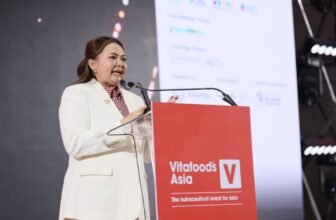

![Thais set pace for health product developmentTHE Philippines can learn from Thailand on how it developed its health product industry and develop its vast natural resources for standardized plant-based extracts that have a growing export market.
Rungphech “Rose” Chitanuwat, country general manager, Informa Markets in the Philippines, said that granting incentives to companies that will develop health products locally is important, and so are other types of government support.
“In [the] Philippines, you have PEZA; in Vietnam it’s industry parks,” she said, referring to the Philippine Economic Zone Authority that is authorized to grant incentives to locators of its industrial parks.
Also, the Thai government is active in research and development (R&D) for health products developed using indigenous materials.
“You can pick up the product, and use the technology transfer, and develop your own business. So, that means the R&D is there,” Chitanuwat said.
“The Ministry of Higher Education, Science, Research and Innovation (MHESI) is working on that,” she added.
Also, the Thai government makes sure that its R&D system for health products is well funded.
Chitanuwat said, like in many countries, after the pandemic, Thais started to become more health conscious and increased their spending for products to strengthen their immune system, among others.
“We saw that happening after Covid. The demographic also changed in Thailand,” she added, explaining that more Thais were purchasing health products and supplements to improve their health and not just cure an existing disease.
Among the success stories of a company in Thailand that is producing standardized plant-based extracts and health products is publicly listed Specialty Natural Products Public Company Ltd. (SNPS) and its subsidiary Specialty Innovation Co. Ltd. (SI).
SNPS took advantage of Southeast Asia’s ability to grow year-round plants that cannot be grown in temperate countries. Among these are butterfly pea, turmeric, annatto, gardenia, roselle, pandan, and sap-pan, which can be a source of standardized plant extracts.
The standardized plant extracts are used in various industries such as food, pharmaceuticals, cosmetics and personal care.
THE MANILA TIMES](https://agriadvice.org/wp-content/uploads/2026/09/1229799-336x220.jpg)
