 Cres Ian Lorenzo
LOS BAÑOS, Laguna — Agricultural transformation will not come from research alone, but from how people are taught to use it.
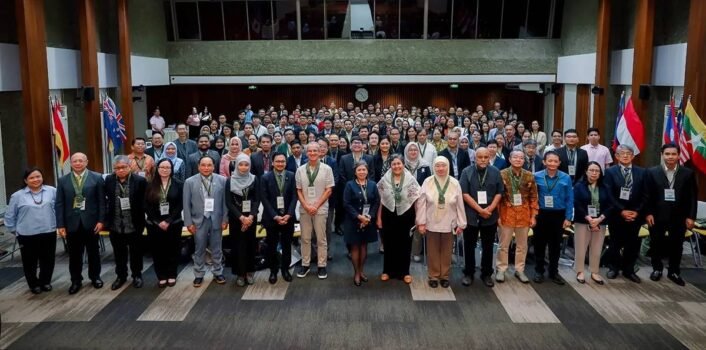
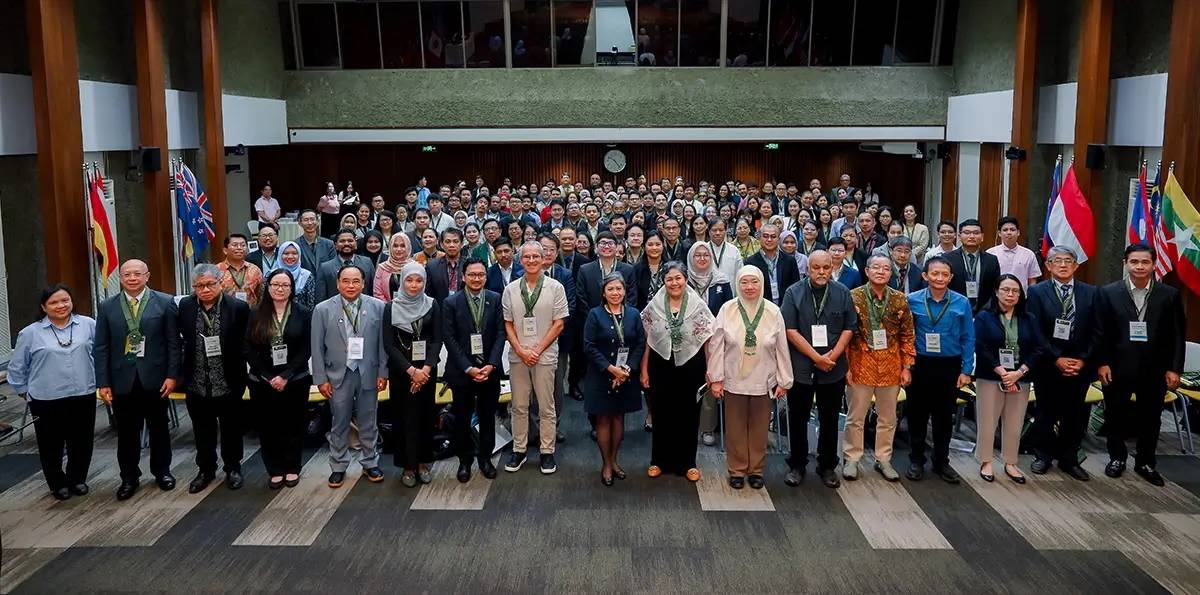
That premise shaped the Southeast Asian Regional Center for Graduate Study and Research in Agriculture (Searca) as it opened its 60th anniversary celebration on Oct. 19-20, 2026 at its headquarters in Los Baños.
Scholars, alumni, researchers, educators, and development partners gathered for a conference on sustaining Southeast Asia’s agricultural futures, with education at the center of discussions on rural livelihoods, food security, and sustainable development.
The program included keynote addresses, six parallel sessions and two special sessions on educational innovation and micro-credentials. A recurring theme emerged: universities must prepare graduates who can work with farmers, navigate policy, and adapt science to local conditions.
As Searca enters its seventh decade, its anniversary discussion framed education as the mechanism through which transformation becomes possible.
Scholarship measured by impact
Searca Center Director Mercedita Sombilla described investment in education as investment in the region’s future.
Datuk Habibah Abdul Rahim, director of the Southeast Asian Ministers of Education Organization (Seameo) Secretariat, said the value of a scholarship should be measured by its effect on people’s lives rather than by the credential itself.
Daniel Weary of the University of British Columbia drew on decades of animal welfare research to show why scientific evidence does not automatically change farming practice. He emphasized working directly with farmers to understand constraints and develop practical solutions.
The six parallel sessions covered resilient smallholder enterprises, crop innovation, climate adaptation, social inclusion, biodiversity, and healthy food systems.
The topics aligned with Searca’s Sustain Southeast Asia agenda: higher farmers’ incomes, improved food security and nutrition, resilient agricultural systems, and empowered farmers and institutions.
Professor M. Iqbal Saripan of the Malaysian Qualifications Agency shared Malaysia’s experience with micro-credentials. He explained how quality assurance allows shorter learning units to be combined toward formal qualifications, expanding access to professional development and higher education.
Two special sessions, organized with the European Union co-funded Postgraduate Micro-credentials for Food Security and Climate Change project, explored flexible learning models and regional collaboration on learning pathways for climate and food security.
Professor Jose Camacho Jr., chancellor of the University of the Philippines Los Baños, highlighted the partnership between Searca and its host institution in training generations of agricultural scientists, leaders and practitioners.
Policy, community and the next generation
Three recipients of the 2026 Outstanding Searca Scholarship Alumni Awards were also featured: Asikin Yoeu of Cambodia, Weerapon Thongma of Thailand, and Department of Economy, Planning, and Development Secretary Arsenio Balisacan.
Yoeu discussed conservation agriculture and sustainable intensification, emphasizing collaboration among governments, universities, extension networks, and private enterprises. She advocated women’s leadership and stronger support for smallholder farmers, and warned that policy has limited value if it stays in conference rooms.
Thongma discussed how universities can build community capacities and strengthen local ownership. Drawing on university-community partnerships and community-based tourism, he stressed that development begins with understanding people’s lived experiences and that knowledge should come from local voices as well as researchers.
Balisacan identified five challenges shaping the region’s agricultural future: climate change, geopolitical tensions and supply chain disruptions, artificial intelligence and emerging technologies, the energy transition, and the need to expand human opportunities. He urged scholars to examine who benefits from development interventions, who bears the costs, and whether solutions respond to the needs of rural families.
The conference’s central message was that agricultural innovation must be supported by education, institutions and partnerships to translate research into improvements in people’s lives.