 Cres Ian Lorenzo
LA UNION — Beekeeping can fail in two places: inside the hive, when a colony weakens and dies; and outside it, when honey cannot be sold.
Those two risks shaped a three-day training conducted by the Don Mariano Marcos Memorial State University-National Apiculture Research, Training and Development Institute (DMMMSU-NARTDI) in Bacnotan, La Union from Oct. 27 to 29, 2026.
Ten participants from regions in Luzon took part in the training series for the fourth quarter, held under the project “Capability Enhancement on Apiculture: Building Advocates of Beekeeping.” The program treated technical care and business planning as equal parts of the same livelihood, rather than as separate lessons.
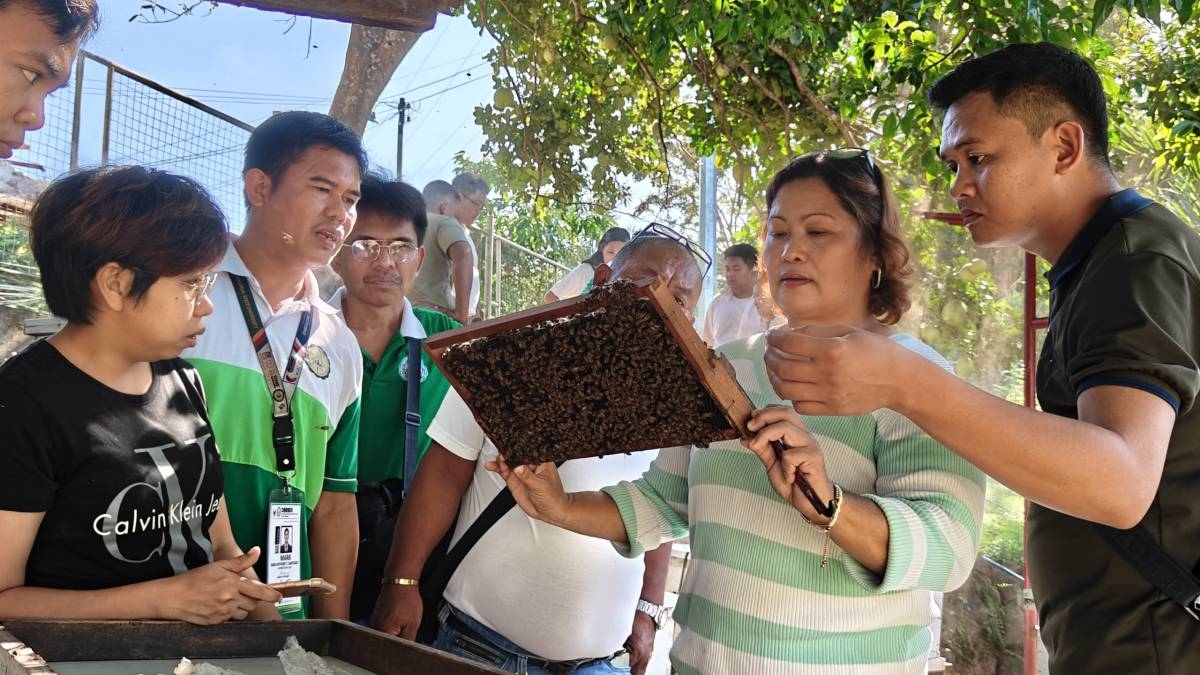
The opening course, “Foundations of Apiculture: Hive Management and Pest Control,” ran from Oct. 27 to 28. It covered honeybee biology, beekeeping tools, and equipment, hive construction, colony management, and bee pasture management.
Participants also studied how to identify and respond to common diseases, parasites, and predators. A colony under stress can decline rapidly, and the loss can wipe out months of labor, feed, and investment before a beekeeper has honey to sell.
To address that risk, the training moved quickly from discussion to practice. At NARTDI’s demonstration apiary, participants took part in demonstrations and hands-on activities that showed how to inspect colonies, maintain hive conditions, and apply measures to reduce losses.
The message was practical: healthy colonies are not maintained by chance. They require regular observation, timely intervention, and knowledge of what threatens them.
The second risk: Losing the income
On Oct. 29, the training turned to the second risk. The course “Apiculture Entrepreneurship: Value-Adding and Market Strategies” examined how beekeeping can generate income through honey-based enterprises.
The sessions covered the economics of beekeeping, gender awareness, honey extraction, product preparation, post-harvest handling, and market strategies. Participants also practiced honey processing and product preparation, with attention to techniques that improve quality and prepare honey products for sale.
The business focus addressed a familiar problem for small producers. Even when colonies survive, earnings can remain low if honey is extracted poorly, handled carelessly, or offered without a clear market. Quality, packaging, and buyer access determine whether beekeeping becomes a livelihood or remains an occasional activity.
Taken together, the two courses form part of NARTDI’s extension work to give aspiring and existing beekeepers technical knowledge and basic business skills for colony management, honey production, and livelihood development.
The series also covered sustainable beekeeping practices, responsible production, and income opportunities through apiculture. Sustainability, in this context, meant protecting colonies and the environment while building an enterprise that can continue.
For the 10 participants, the three days offered a complete test of beekeeping: first, whether a colony can be kept alive; and second, whether its honey can be turned into income.
The training also emphasized that a beekeeper who masters only one side remains exposed to the other. A colony saved but unsold earns nothing. Honey produced but poorly handled loses value. The training was built to close both gaps at once.