 Cres Ian Lorenzo
LOS BAÑOS, Laguna — A new policy brief from the Southeast Asian Regional Center for Graduate Study and Research in Agriculture (Searca) highlights how school feeding programs in Southeast Asia can serve two development goals at once: improving children’s nutrition; and providing more dependable markets for smallholder farmers.
The brief, titled “Integrating Smallholder Agriculture into School Feeding Programs: Addressing the Agri-Health Disconnect,” examines how public spending on school meals can be connected to local agricultural development.
It is based on cross-border research undertaken in Malaysia and Indonesia from April to May 2026 by Dr. Bima Indra, a medical doctor and Master of Public Health candidate at Universitas Muhammadiyah Jakarta, with supervisors Dr. Juliana Jalaludin of Universiti Putra Malaysia and Dr. Dewi Purnamawati.
The study was supported by Searca through its Faculty and Student Mobility Grant, allowing the grantees to conduct research at University Consortium member-universities and other agricultural institutions.
The work focused on Malaysia’s Rancangan Makanan Tambahan (RMT) for primary pupils from low-income households and Indonesia’s Makan Bergizi Gratis (MBG) managed by the National Nutrition Agency.
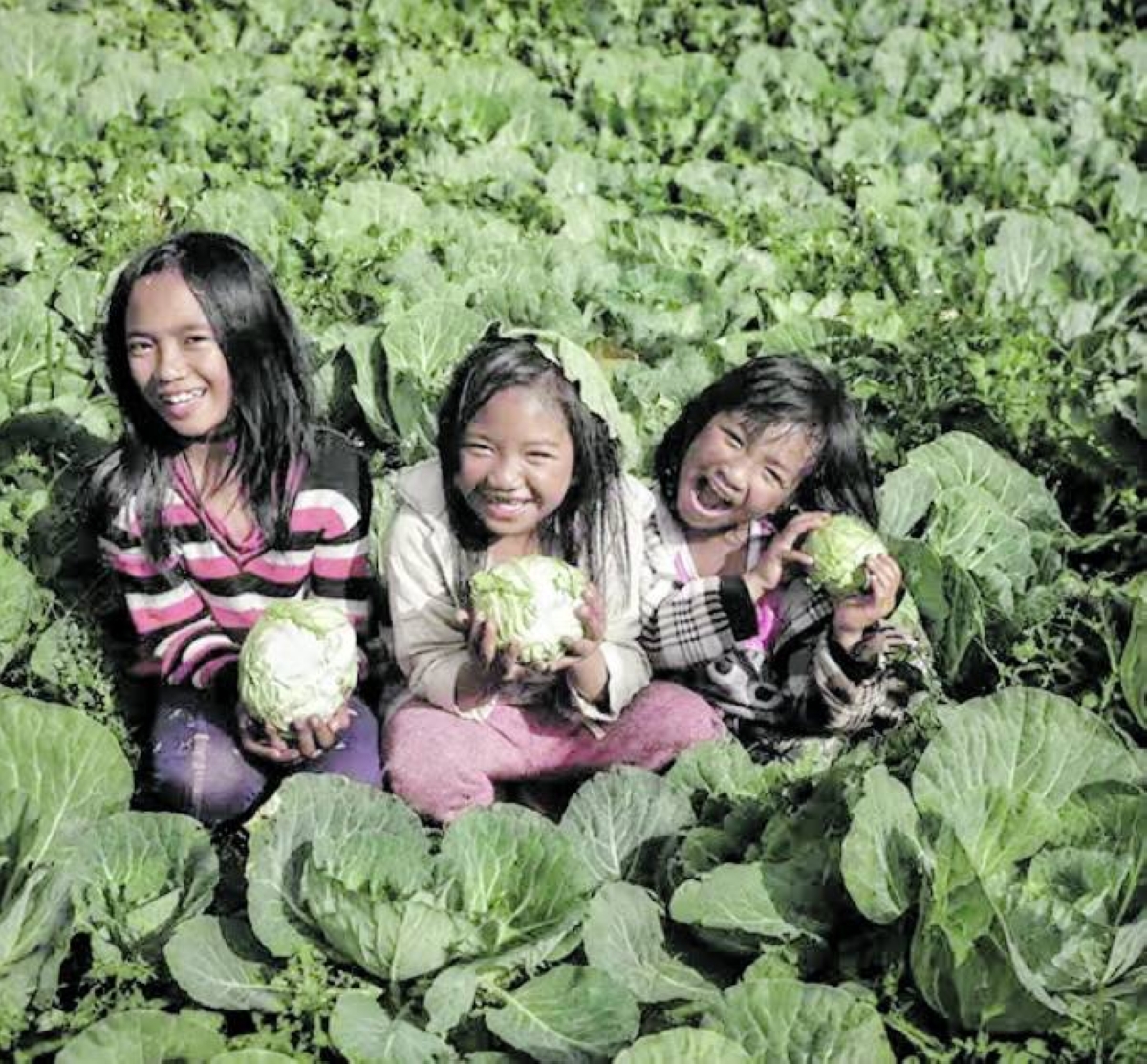
School feeding programs can provide opportunities for smallholder farmers to have a stable market for their produce, according to a new policy brief from the Southeast Asian Regional Center for Graduate Study and Research in Agriculture. SEARCA PHOTO
Untapped market
The authors said school feeding represents a large and relatively stable source of institutional demand for food, funded by significant public resources across the region. If procurement is structured to include local producers, that spending could open market opportunities for farming communities.
The policy issue therefore extends beyond what is served to children to include where ingredients come from, who is able to supply, and how procurement can create value in local food systems.
The brief identifies an agri-health disconnect between procurement requirements and smallholder food producer realities. School kitchens feeding hundreds of children need consistent quantities, formal invoices, compliance with food safety standards, and suppliers able to operate under reimbursement cycles that can last 30 to 60 days.
Smallholders, in contrast, often produce limited volumes per crop, operate informally, lack capacity to issue electronic invoices or hold required certifications, and need immediate payment after harvest to finance the next purchase of inputs.
That gap in scale, documentation, and liquidity makes direct transactions difficult, prompting kitchens to rely on larger wholesalers that can meet bulk and administrative needs.
Based on an exploratory qualitative case study involving expert consultations, review of national guidelines and interviews with procurement and kitchen actors, the study found that local operators were willing to source locally but cited liquidity constraints and audit concerns.
Proposals
Among the recommendations is the establishment of community-based aggregators (CBAs), including cooperatives, that would consolidate produce from multiple smallholder farmers and handle invoicing, tax compliance, and certification. The brief calls for formally integrating CBAs into procurement systems with oversight to keep them as community assets.
It also proposes state-backed micro-escrow funds that would allow prompt payment to farmers on delivery, with the aggregator managing the longer government reimbursement period.
Another recommendation is guided menu flexibility, permitting local substitutions that still meet recommended dietary allowance targets. The brief cites a scenario where a centralized menu requires cabbage despite local surplus of amaranth, forcing kitchens to purchase outside produce. Flexibility, the authors said, could help absorb local surpluses, respond to price swings, and create space for nearby farmers.
The paper also recommends strengthening nutritional monitoring beyond sanitation and administrative compliance and investing in community-level cold chain infrastructure for storage and transport to cut postharvest losses.
The Philippine context
In the Philippines, Searca has long worked on linking school-based feeding with local food systems alongside the Department of Education (DepEd) and partners.
One model is home-grown school feeding (HGSF), which Searca has studied and piloted in various forms. The approach is now being expanded nationally with the World Food Programme.
In Cauayan, Isabela, a pilot launched with DepEd and the city government aims to provide daily meals to 2,000 schoolchildren sourced from 500 smallholders in 2024-2025, with plans to reach 6,000 children and 1,000 farmers by 2027.
In the Bangsamoro Autonomous Region in Muslim Mindanao (BARMM), a similar effort targets 10,000 children and 5,000 farmers across seven towns in Maguindanao.
DepEd itself is advancing a farm-to-school strategy. In March 2026, Education Secretary Sonny Angara met farmer cooperatives at Tangway Integrated School in Lipa City, Batangas, to discuss direct vegetable supply for its feeding program.
The department is set to implement a P25.6-billion Expanded School-Based Feeding Program for school year 2026-2027 for 4.63 million learners.
The Sagip Saka Act, which mandates preferential procurement from accredited farmers and fisherfolk cooperatives, provides legal backing for such models.
Searca said the policy brief aligns with its 12th Five-Year Development Plan, Sustain Southeast Asia, which prioritizes education, capacity building, and farmer empowerment.
By piloting localized procurement frameworks that combine aggregation, financing, menu flexibility, monitoring, and cold chain, the brief concludes, governments can make school feeding function in two directions — delivering nutrition to children while creating more inclusive markets for the smallholders who produce the food.