 Cres Ian Lorenzo
THE Southeast Asian Regional Center for Graduate Study and Research in Agriculture (Searca) is updating its training module on agricultural biotechnology to give local public servants a more science-based and accessible resource for decision-making and public engagement.
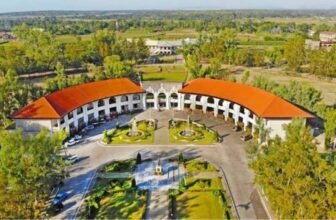
The revision was carried out through a writeshop held on Sept. 24-25, 2026 at the Searca Residence Hall in Los Baños, Laguna, which gathered subject specialists, the project management team, and a lead technical reviewer to review and enhance the existing material.
The activity falls under the Strengthening the Enabling Environment for the Development and Uptake of Modern Agricultural Biotechnology or SEED Project, implemented by Searca and funded by the Department of Agriculture-Bureau of Agricultural Research through its Biotechnology Program Office.
BUILDING ON AN EARLIER MODEL
The module being enhanced was first developed in 2024 under Searca’s Building Understanding and Mobilizing Public Support for Agricultural Biotechnology or BUMP UP Biotech Project.
According to Searca, the current enhancement aims to make the material more comprehensive and grounded in updated scientific and technical information, while addressing the practical information needs of public servants in SEED project areas, particularly local government units.
The Searca SEED project management team from the Research and Thought Leadership Department facilitated the workshop. The team included Program Specialist Rochella Lapitan, Project Associate Krissane Cabral, and Project Assistant Maricel Adique.
Serving as lead technical and editorial reviewer was Ma. Stella Tirol, a retired faculty member and former dean of the College of Development Communication at the University of the Philippines Los Baños (UPLB).
Five lessons reframed around science and local governance
The writeshop brought together experts who are assigned to refine specific lessons.
For the fundamentals, Maribel Zaporteza, assistant professor at the Genetics and Molecular Biology Division of the Institute of Biological Sciences, College of Arts and Sciences, UPLB, is developing content on basic concepts of biotechnology, including genes and heredity, biotechnology products, and applications such as biofertilizers and Bt corn.
The lesson is intended to establish a common scientific vocabulary for non-specialist audiences in local governments units (LGUs).
On health and environment, Nina Gloriani, former dean of the UP Manila College of Public Health, is preparing material on applications in human and animal health, genetically modified organisms, environmental benefits, and safety considerations.
Risk and regulation are being addressed by Carlo Custodio Jr., Philippine country coordinator of the Program for Biosafety Systems, who leads the lesson on biotechnology risks and safeguards.
Custodio’s component covers risk assessment, biosafety principles, regulatory approaches and emerging issues, placing emphasis on how science informs safety evaluation.
For local governance, Jenny Panopio, president of the Pest Management Council of the Philippine, Inc. and senior advisor for the Philippines at Narraharvest Advisors Pte. Ltd., is preparing the module on policies, programs, and implementation, focusing on the Philippine regulatory framework and the roles of LGUs in supporting agricultural biotechnology.
On communication, Ruby Cristobal, senior lecturer at the College of Development Communication, UPLB, is designing the topic on media engagement.
The lesson, titled “BioTekTok sa Media: Talking about Agri-Biotechnology in the Media,” focuses on LGU media engagement, effective biotechnology storytelling, and practical skills in writing press releases, handling press conferences and interviews, and managing crisis communication.
ENSURING ACCURACY FOR LGUS
Tirol is providing an overall review to ensure accuracy, coherence, clarity and quality across all lessons.
The updated module is intended as a practical reference for public servants, particularly those in LGUs who are tasked with communicating, implementing and supporting agricultural biotechnology initiatives.
By anchoring the revision in science-based content and local governance realities, Searca said the material seeks to equip public servants with both the technical understanding and communication tools needed to engage constituents on biotechnology issues in their localities.